
Last updated October 30, 2026
 Home additions & ADU
 Kitchen remodeling
 Bathroom remodeling
 Roofing
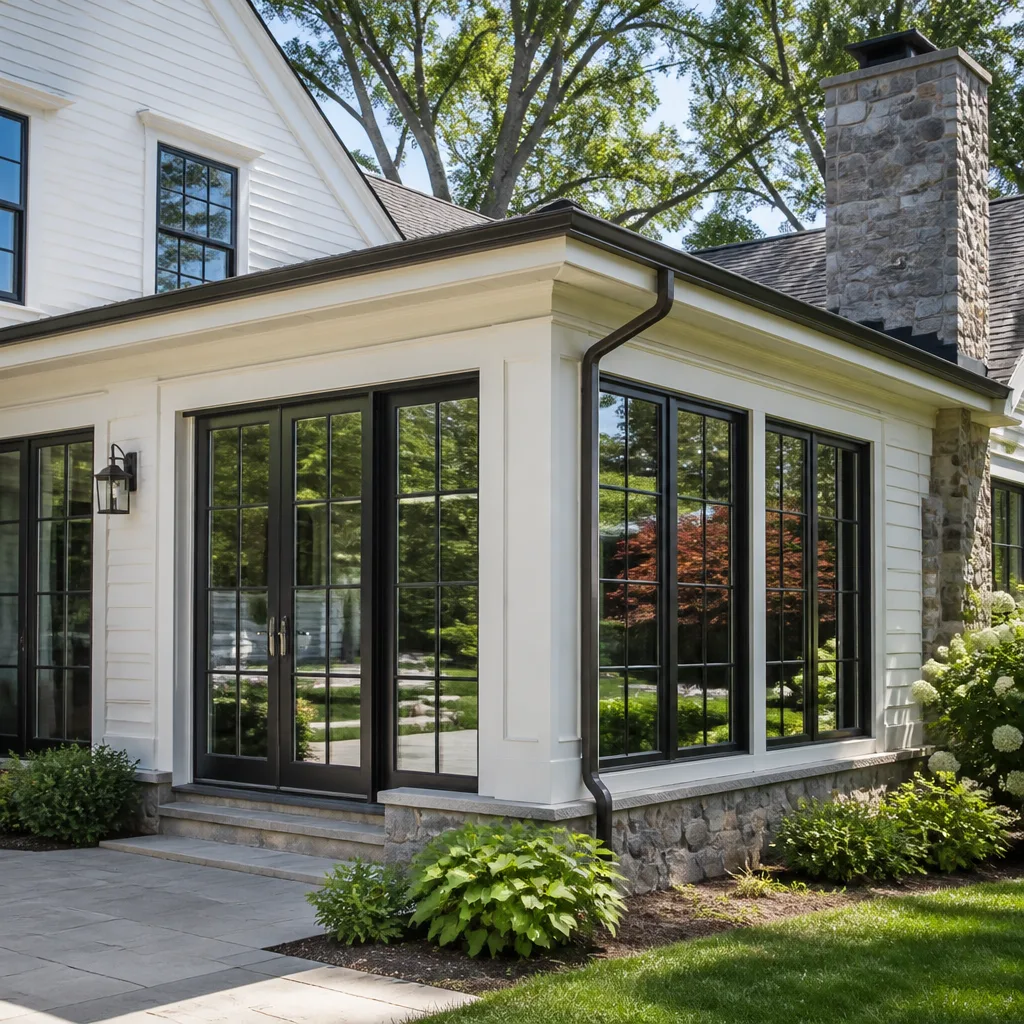 Windows & doors
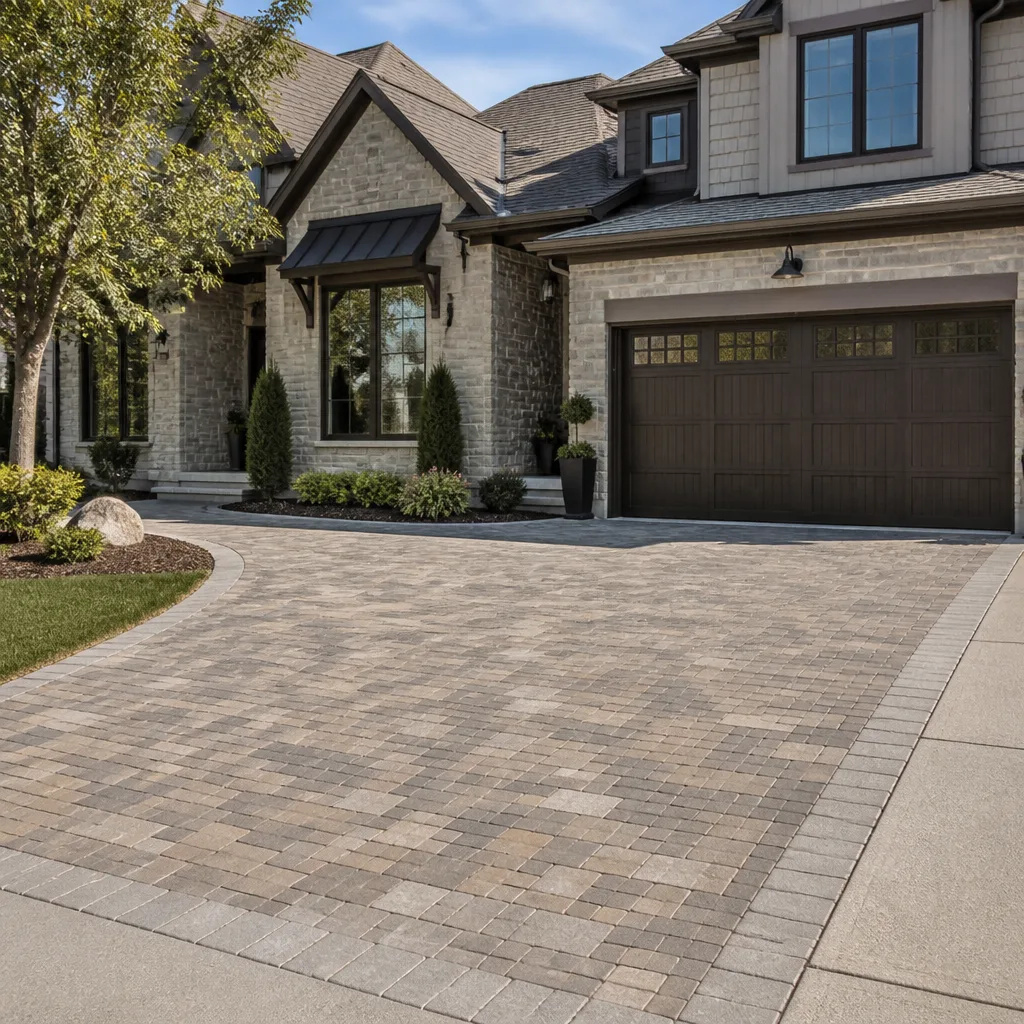 Driveway & pavers
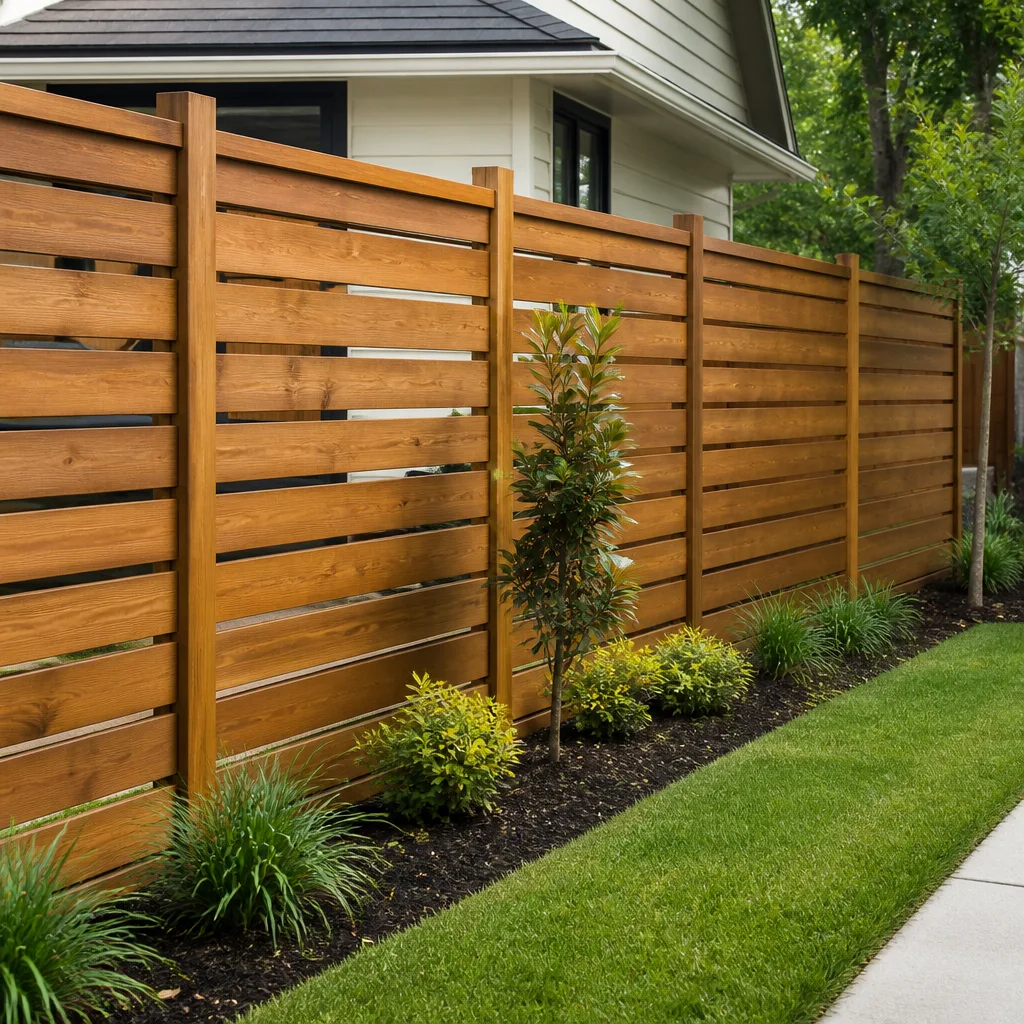 Fence
Free written scope consultation - allowances, timeline, and change-order rules on paper before a single trade is scheduled
Construction Warning Signs: A Victorville Homeowner’s Reference Guide
A diagonal crack above a door frame isn’t automatically a foundation problem, but in Victorville’s expansive soil zones, it’s one of the earliest visible signs of differential settlement that, if ignored, can cost five times more to remediate in three years than it does today. Most structural and system warning signs in Victorville homes aren’t random. They follow predictable failure patterns tied to the desert climate, the region’s soil behavior, and the construction practices common during the Victor Valley’s 1980s through 2000s building boom. This guide walks you through what those signs look like, why they happen here specifically, and which ones demand immediate attention versus which ones you can document and monitor, with more guides & resources available for ongoing reference. Knowing what you’re actually looking at turns a homeowner from anxious into informed.
Styles & brands we work with
Quick Answer
The most serious construction warning signs in a Victorville home are diagonal cracks wider than 1/8 inch above doors and windows, stair-step cracking in stucco or block walls, visible slab heaving or settling, granule loss and flashing lift on roofing, and HVAC duct separation in unconditioned attic spaces. These five patterns account for the majority of expensive repairs we see across Victorville, and each one has a specific cause tied to High Desert soil, UV exposure, or building-era practices.
Table of Contents
- Cracks That Matter: Cosmetic vs. Structural in Victorville Soil
- Roofing Warning Signs Specific to High Desert UV Exposure
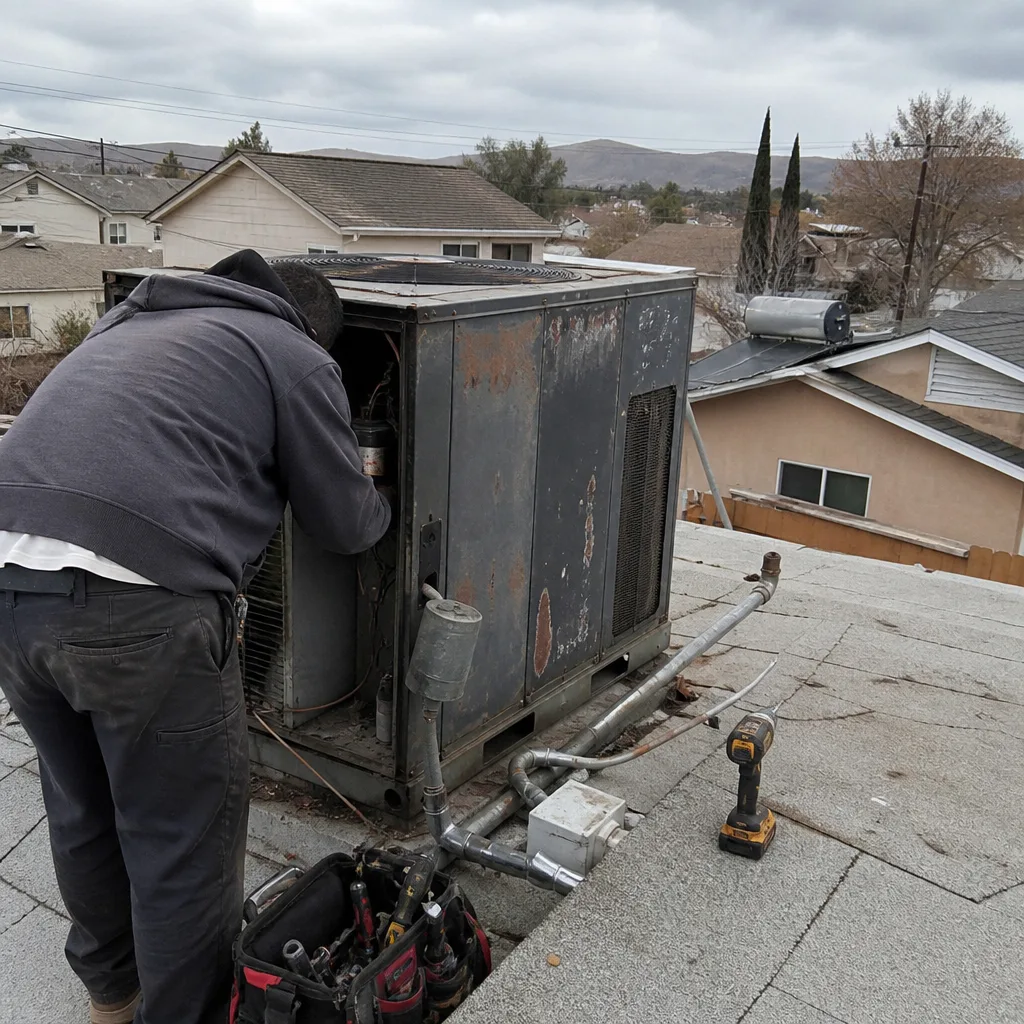
- HVAC and Ductwork Failure Signs in Victorville Attics
- Foundation and Slab Warning Signs in Expansive Soil Corridors
- Stucco and Exterior Wall Warning Signs Victorville Homeowners Miss
- Window, Door, and Seal Failure Signs in Desert Temperature Swings
- Specialist vs. General Contractor: Who Assesses What
- Common Mistakes to Avoid
- When to Call a Professional
- Frequently Asked Questions
- The Bottom Line
Cracks That Matter: Cosmetic vs. Structural in Victorville Soil
Victorville sits on soil that expands when wet and contracts when dry. This movement, called expansive soil behavior, is the single biggest driver of cracking in local homes. But not every crack signals a structural problem. The difference comes down to width, direction, and location, and learning to read these three factors will save you from either panicking over a hairline seam or ignoring a genuine settlement issue.
Hairline cracks under 1/16 inch that run vertically or in a spiderweb pattern across drywall are almost always cosmetic. They form when the house breathes through seasonal temperature and humidity shifts. In Victorville, where summer attic temperatures routinely exceed 140 degrees and winter nights drop below freezing, drywall expands and contracts enough to produce these fine lines within the first few years of a home’s life. They’re not a defect. They’re a material behavior.
What should get your attention is a crack that meets any of these criteria:
- Diagonal cracks above door frames or window corners that angle downward toward the opening at roughly 30 to 60 degrees. These indicate shear stress in the wall assembly, and in Victorville homes they frequently trace back to differential settlement under one corner of the foundation.
- Stair-step cracking in stucco or CMU block walls, especially on exterior elevations. This pattern follows mortar joints in a zigzag and is a textbook sign of foundation movement, not surface wear.
- Cracks wider than 1/8 inch that continue to grow over a 90-day tracking period. Width alone matters less than progression. A stable 1/8-inch crack may be old settlement that finished long ago. A 1/16-inch crack that doubles in six months is a live problem.
- Cracks that align on both sides of a wall, meaning you can see the same line inside and outside the house. This signals full-thickness separation, not surface cosmetic movement.
We’ve walked into Victorville homes where homeowners had patched and repainted a diagonal crack above a hallway door three times in five years. Each time, the patch failed within a season because the underlying cause, settlement under a master bedroom wing, was never addressed. The fourth patch didn’t fail only because we scoped the foundation and corrected the source first.
How to Document What You Find
- Photograph every crack wider than 1/16 inch with a quarter or a ruler held against the wall for scale. Take one wide shot of the wall and one close-up.
- Mark the end of each crack with a pencil line and date it. A crack that extends past your mark in 60 days is an active movement crack.
- Measure the widest point with a crack gauge or a simple ruler. Log it in a spreadsheet or notebook.
- Re-check every 30 days for 90 days. Three data points tell you whether the movement is ongoing, seasonal, or historic.
- If any crack widens by more than 1/16 inch or extends past your pencil mark during tracking, call a general contractor for a foundation assessment in Victorville. Do not wait a year.
Roofing Warning Signs Specific to High Desert UV Exposure
Victorville averages more than 280 days of sunshine per year, and the High Desert’s elevation means that sunlight lands harder here than it does at sea level. UV radiation breaks down asphalt shingle binders over time, causing a specific failure pattern: granule loss that exposes the fiberglass mat underneath. Once the mat shows, the shingle is no longer waterproof, and the clock has started on a roof replacement.
The first visible sign is not a leak. It’s grit. If you look at your gutters or downspout splash blocks after a rain and see a dark, sand-like residue, those are shingle granules washing off your roof. Some granule loss is normal in the first year of a new roof, but steady loss from year three onward means UV degradation is accelerating. In Victorville’s climate, asphalt shingle roofs rarely reach their rated lifespan. A 30-year shingle often performs 18 to 22 years here, sometimes less on south-facing elevations that absorb the full force of the afternoon sun.
Other roofing warning signs specific to the High Desert include:
- Flashing lift at chimney bases, plumbing vent collars, and skylight curbs. The extreme temperature swings from sub-freezing winter nights to 100-degree summer days cause metal flashing to expand and contract. Over time, the sealant between flashing and shingle cracks and lifts, creating a water entry path that shows itself not as a roof leak but as a ceiling stain weeks after rain.
- Brittle, cupped, or curling shingles on south and west slopes. This is direct UV damage. The shingles lose flexibility, the edges curl upward, and wind gets underneath them.
- Missing shingle tabs after high-desert wind events. Victorville regularly sees 30 to 50 mph gusts, and once shingles lose their sealant bond from UV age, those gusts peel them clean off.
- Mineral deposits or white chalk residue on roof tiles. Hard water from evaporation leaves calcium deposits that indicate areas where water has pooled or run repeatedly, pointing to drainage problems.
We recommend Victorville homeowners schedule a roof inspection every two years after year 10 of their roof’s age, and annually after year 15. A trained eye catches lifted flashing and granule loss before the interior of your home tells you about it. Many of our clients with CertainTeed or GAF roofing systems install them anticipating the High Desert’s UV load, and those material choices buy real years of performance, but no roof in this climate is install-and-forget.
HVAC and Ductwork Failure Signs in Victorville Attics
The majority of Victorville homes built during the 1980s through early 2000s run flex duct through unconditioned attic spaces. That means your ductwork lives in an environment that hits 140 to 160 degrees in July and August. Flex duct fails under that heat load in predictable ways: the outer vapor barrier degrades, the inner liner separates, and the duct sags, kinks, or splits at the connection points.
The warning signs show up as comfort problems long before you see any actual duct damage. The most common complaints we hear from Victorville homeowners are:
- Rooms that never reach the thermostat setpoint in summer, especially upstairs bedrooms or rooms at the far end of the duct run. This points to either a disconnected duct dumping conditioned air into the attic, or a severely constricted duct run.
- Dust accumulating on surfaces within days of cleaning. Duct separation pulls dusty attic air into the supply stream and pushes it through every register.
- Energy bills that climb every summer even as comfort falls. Your system runs longer trying to overcome the loss of conditioned air into a 150-degree attic, and the AC unit works harder than it should.
- A hot ceiling directly under the attic duct run. When conditioned air escapes into the attic, that heat exchange warms the drywall below and you feel it as a warm spot.
- Whistling or hissing sounds at registers when the blower runs. That’s air forcing through a gap it shouldn’t be going through.
In Victorville, duct problems compound because the AC system runs more hours per year than in coastal climates. A small duct split in a San Diego attic wastes maybe 10 percent of your cooling. The same split in a Victorville attic, where the system cycles continuously through July and August, turns into a 20 to 30 percent loss. It’s the same defect with a High Desert multiplier.
This is also one of the clearest examples of where a general contractor who understands whole-home systems beats a single-trade specialist, as covered in our General Contractor Troubleshooting: Common Problems and How to Fix Them. Duct repair often requires coordination with drywall access, insulation replacement, and sometimes roof or vent work. The fix is never just the duct.
Foundation and Slab Warning Signs in Expansive Soil Corridors
Victorville’s soil maps show significant pockets of expansive clay, particularly in older sections of the city and in the unincorporated Victor Valley corridor areas east toward Apple Valley. These soils shrink and swell dramatically with moisture changes, and the movement is rarely uniform. One corner of your slab can rise while another settles, and that’s when the house tells you something’s wrong.
The warning signs are specific and measurable. What you’re looking for is evidence that the slab is no longer acting as one continuous piece:
- Doors and windows that stick seasonally. A door that binds in August but swings freely in December is following the soil’s moisture cycle, not a hinge problem. When the soil swells, the frame distorts and the door jams.
- Gaps between the baseboard and the floor that open and close through the year. This is slab movement telegraphing through the wall assembly.
- Cracks in the slab itself, visible in garage floors, patios, or wherever concrete is exposed. Hairline shrinkage cracks are normal. Crack widths beyond 3/16 inch with vertical displacement, where one side of the crack sits higher than the other, are not.
- Separation at the interface between the house and attached slabs, like where a garage slab meets the house foundation, or where a patio cover post meets the earth. Any gap that widens seasonally is live movement.
- Interior doors that swing open or closed on their own. When a slab tilts, gravity takes over, and doors become plumb indicators.
The Victorville-specific reality is that proper drainage is the cheapest foundation insurance you can buy. Expansive soil doesn’t move unless its moisture content changes. Keep water away from the foundation perimeter, and you’ve eliminated the trigger for most expansive soil movement. That means keeping gutters clean, extending downspouts at least five feet from the slab edge, and grading landscape beds so they slope away from the house. In the high desert’s flash-flood downpours, this matters more than most people realize. A single heavy storm that dumps an inch of water against a foundation wall can hydrate the soil enough to shift a slab a quarter inch or more.
Stucco and Exterior Wall Warning Signs Victorville Homeowners Miss
Stucco is the dominant exterior finish in Victorville, and it performs well in dry heat, but the High Desert climate creates specific failure modes that most homeowners don’t recognize until water has already done damage. The warning signs are subtle because stucco hides moisture behind its surface. By the time you see a stain on the inside of an exterior wall, the stucco system has often been compromised for months or years.
Walk the exterior of your home twice a year and look for these conditions:
- Hairline map-cracking across large stucco surfaces. This is usually a installation defect from the 1980s and 1990s boom era, when stucco was applied too thinly or mixed too dry. The cracks themselves are cosmetic, but they’re entry points for water during Victorville’s winter rain events, and that water becomes a mold and rot problem behind the surface.
- Discoloration or mineral streaking below stucco cracks. White or rust-colored streaks mean water has been running through the crack and dissolving or oxidizing minerals in the stucco matrix. This is a sign the crack is active as a moisture channel.
- Stucco pulling away from window and door frames. Gap formation around penetrations means the stucco has lost its bond to the lath or the weepscreed is blocked. This is a water entry point.
- Bulging or blown-out sections. If you press on a stucco surface and it flexes or sounds hollow, the base coat has delaminated from the lath. This is structural stucco failure and the section will eventually fall off.
- Stucco cracking in a straight vertical line along a wall plane change, like where a two-story section meets a single-story section. This is a control joint problem, either missing or improperly installed during the original build.
Victorville’s stucco stock is aging. Homes built in the late 80s and 90s are now 30 to 40 years old, and stucco systems from that era had a typical service life of 40 to 50 years under ideal conditions. The High Desert’s UV load and thermal cycling pull several years off that. If you own a 1990s Victorville home with original stucco, schedule an exterior inspection now, even if you don’t see obvious damage. Catching hairline map-cracking before it becomes moisture intrusion is a fraction of the cost of re-stuccoing a wall that’s rotted behind the surface.
Window, Door, and Seal Failure Signs in Desert Temperature Swings
Victorville’s daily temperature swing, often 30 to 40 degrees between day and night, puts constant mechanical stress on window frames, door seals, and the weatherproofing at every penetration in your building envelope. The warning signs show up as air leaks, condensation, and frame distortion, and they follow patterns specific to homes that cycle between extreme heat and near-freezing cold.
The most common failure signs we see in Victorville homes are:
- Condensation between double-pane glass. This is a failed seal. The inert gas between the panes has escaped, and the window’s insulation value is now roughly equal to a single pane. In Victorville, where window area on west-facing walls absorbs massive afternoon heat, a failed thermal barrier means your AC runs harder every summer day.
- Visible light around door edges when closed. If you can see daylight through the gap between a door slab and its frame, the door is not sealing. Air that leaks in or out is air you paid to condition. It’s also a dust entry point during High Desert wind events, and Victorville dust is a real factor in interior air quality.
- Windows that no longer latch without force. Frame distortion from thermal cycling means the sash and frame are no longer square. Forced latching bends hardware, and once hardware bends, the window never seals again without repair or replacement.
- Caulking pulling away from window perimeters. Walk the exterior and look for gaps at the joint where the window flange meets the stucco or siding. This joint is the primary water barrier at the window, and Victorville’s UV exposure breaks down caulk faster than most climates. Expect to recaulk exterior window perimeters every three to five years.
- Door thresholds that have worn or compressed to the point that the door sweep doesn’t contact the threshold. This is a common entry point for both conditioned air loss and pest intrusion, and in Victorville, scorpion and black widow entry typically happens at door thresholds.
Window and door performance is one of the clearest examples of the difference between a repair and a replacement. A single failed-pane seal can be reglazed. A sticking door can be re-hung and re-weatherstripped. But when multiple windows in a 1990s Victorville home are failing simultaneously, the right move is often a full window replacement with a frameset designed for desert thermal cycling. The assessment is a conversation, not a canned recommendation, and it starts with knowing which warning signs indicate localized failure versus system-wide age.
Specialist vs. General Contractor: Who Assesses What
One of the most useful things a Victorville homeowner can understand is which warning signs require a single-trade specialist and which ones a qualified general contractor can assess and scope, a topic we explore in depth in our DIY vs Professional Construction: The Victorville Homeowner’s Decision Guide. The distinction saves you money and time. It also prevents the common situation where a homeowner calls three different specialists, gets three different diagnoses, and then has to coordinate the repairs themselves.
Here’s the breakdown based on what we see across Victorville:
Call a specialist first when:
- A structural engineer is needed for foundation movement beyond basic slab settlement. If cracks exceed 1/4 inch, if there’s visible floor slope, or if doors have permanently jammed shut, an engineer’s stamped report is the right first step. Victorville’s expansive soils mean some foundation issues require piering or helical systems that only licensed foundation specialists should install.
- The electrical panel or wiring shows signs of arcing or overheating. This is an electrician’s scope, period. The warning signs are scorch marks on outlets, warm breaker surfaces, flickering circuits, or burning smells.
- Gas lines are involved. Any suspicion of a gas leak is an immediate utility provider call followed by a plumber who carries the proper gas-line credentials.
A general contractor can assess and scope when:
- The warning sign spans multiple systems. A roof leak that has soaked drywall, affected insulation, and caused ceiling staining is a roofing issue plus a drywall issue plus an insulation issue. That’s general contractor scope. One contractor, one assessment, one repair plan.
- The warning sign involves the building envelope. Stucco cracking, window sealing, door thresholds, roof flashing, and siding integration are all envelope components. When multiple envelope elements are failing together, the repair needs a contractor who understands how they interact. This is core full-scope general contracting, not single-trade work.
- The repairs require permits. Structural repairs, envelope rebuilds, and any work affecting the home’s lateral systems require Victorville city permits. Stallion Contractors home scoping includes permit coordination from assessment through final inspection. That’s part of one contract and one team.
- The homeowner is planning a renovation alongside the repair. If you’re addressing a foundation crack and already planning a kitchen remodel, it makes far more sense to have one contractor assess both and sequence the work correctly than to juggle a foundation specialist and a separate remodeler who may not talk to each other.
The general rule we tell Victorville homeowners: if the warning sign lives entirely inside one trade’s domain with no collateral damage, call that trade. If the sign involves more than one system, or if you’re not sure which system is the actual source, a general contractor is the more efficient first call. And any warning sign that touches the building envelope or foundation should get a general contractor’s assessment before you spend money anywhere else, following a General Contractor Maintenance Checklist for Victorville Homeowners.
This is where the full-scope model proves its value. When a homeowner calls us about a ceiling stain in a Victorville home, we don’t just look at the drywall. We look at the roof above it, the attic ventilation around it, the insulation, and the wall assembly below it. The stain is often the last event in a chain of causes, and the fix is rarely just a patch and a roof repair. Home Renovation in Colton projects teach the same lesson: the visible symptom is rarely the full scope.
Common Mistakes to Avoid
- Ignoring cracks under 1/16 inch but over 1/8 inch in doorframe corners. Diagonal cracks above door frames are the single most consistent early warning of settlement in Victorville homes, and they get brushed off because they’re small. Track them. If they grow, act.
- Painting over a diagonal crack and assuming it’s fixed. Paint hides the symptom, not the cause. A settlement crack that’s painted will reappear within a season, and the delay often lets the underlying movement worsen while you lose your documentation window.
- Assuming a roof leak will show up on the ceiling. In Victorville’s dry climate, water intrusion often evaporates inside the wall or attic before it reaches the drywall. By the time you see a stain, the leak has usually been active through multiple rain events. Check flashing and shingles from the exterior before the stain appears.
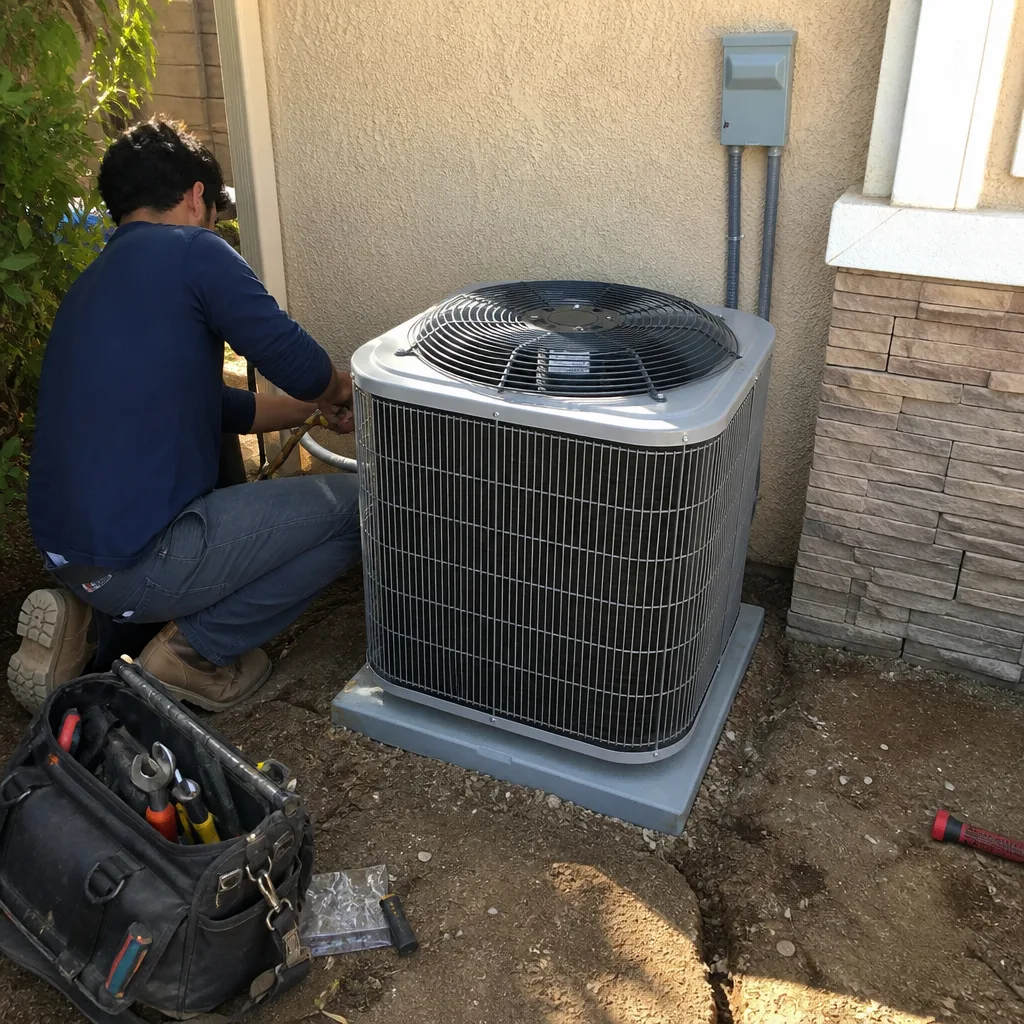
- Running a new HVAC system on old, uninsulated flex duct. Replacing the condenser and air handler without addressing deteriorated ductwork is the most expensive half-fix in Victorville. Your new system will perform at a fraction of its rated efficiency if the ducts are leaking into a 150-degree attic.
- Grading landscape beds toward the foundation. Every inch of slope toward the house is a moisture channel aimed at expansive soil. Victorville’s flash-flood rains make this mistake expensive very quickly. Regrade, extend downspouts, and keep water moving away from the slab.
- Hiring a single-trade specialist for a multi-system warning sign. A roofer who patches the leak but doesn’t scope the damaged drywall and insulation below leaves you with a second repair and a second contractor to coordinate. When the warning sign spans systems, call a general contractor first.
- Waiting until the warning sign is visible from the street. By the time a crack, a stucco bulge, or a shingle problem is obvious from the curb, you’re years into the failure cycle. Early signs are interior and subtle. The best Victorville homeowners track their homes the way they track their health: small, regular check-ins beat dramatic interventions.
When to Call a Professional
Call a professional when any crack you’ve been tracking widens beyond 1/8 inch or extends past your pencil mark within 90 days. Call when you see stair-step cracking on an exterior wall, granule residue in your gutters, a ceiling stain after rain, or condensation between window panes. Call when a room won’t cool to the setpoint in July even though the AC runs constantly. These are not cosmetic issues to monitor. They’re active failure signals, and each one gets more expensive to fix the longer it runs. Stallion Contractors offers free estimates in Victorville, call (855) 600-3192 to have us walk the property and give you a direct, line-by-line assessment of what we’re seeing.
Frequently Asked Questions
A crack is serious if it runs diagonally from a door or window corner, measures wider than 1/8 inch, widens over 90 days, or appears on both the interior and exterior of the same wall. Hairline vertical cracks under 1/16 inch are almost always cosmetic and safe to monitor. Call (855) 600-3192 and we’ll assess any crack you’re uncertain about as part of a free Victorville estimate.
Victorville’s expansive clay soils expand when wet and contract when dry, and this movement is rarely uniform across a slab. Poor drainage, clogged gutters, downspouts that dump water at the foundation edge, and flash-flood rain events all trigger the soil movement that causes cracks, sticking doors, and slab settlement. The fix starts with controlling water at the foundation perimeter.
Asphalt shingle roofs in Victorville typically last 18 to 25 years, well short of the 30-year warranty many manufacturers advertise. The difference comes from UV degradation at High Desert elevation plus thermal cycling that breaks down shingle binders faster. Annual inspections after year 15 are the smartest way to catch granule loss and flashing lift before a leak develops.
A general contractor can assess most early foundation warning signs: crack patterns, slab displacement, door binding, and drainage issues. If the evidence points to significant structural movement, a licensed structural engineer’s stamped report may be the right next step, and a full-scope general contractor will coordinate that process as part of the repair plan. You don’t need to figure out the sequence alone.
With Stallion Contractors, the estimate you receive after assessment is the price you pay unless you change the scope. We write line-item estimates that are fixed for the work described, and we pull permits, pass inspections, and manage every trade so the final invoice matches the plan we agreed to. Call (855) 600-3192 for a free estimate in Victorville and you’ll see the full scope in writing before you commit.
Yes, we pull all required Victorville city permits for structural, envelope, and system repairs, and we manage the inspection process through final sign-off. If a repair doesn’t require a permit, we’ll tell you that too. The permit question is part of our assessment, not an add-on discovered mid-project.
The Bottom Line
Victorville homes send clear signals before they fail. Diagonal cracks above door frames point to soil settlement. Granule loss in gutters points to UV-aged roofing. Rooms that won’t cool point to failing flex ducts in overheated attics. Sticking doors point to slab movement. The pattern recognition is learnable, and once you know what you’re looking at, you stop guessing and start tracking. The most expensive mistake in the High Desert is not noticing a warning sign. It’s noticing it, misreading it as cosmetic, and letting it run for two or three years. Walk your property twice a year, document what you find, and when something signals active movement or moisture intrusion, get an assessment. From the kitchen to the roofline, one contractor can scope the whole picture. That’s the difference between a series of repairs and a real fix.
Written by the team at Stallion Contractors, serving Victorville since 2011. We’re a licensed general contractor providing General Contractor in Colton services, Home Remodeling in Colton projects, and full-scope Home Renovation in Colton work across the High Desert.
See the difference
 Before
 After
 Before
 After
 Before
 After